>
Aclara. Advanced Materials

Technology

Electrospun nanofiber media with the chemistry built in.

Aclara media is an electrospun nanofiber membrane: a mat of sub-micron polymer fibers with an ultrafine, tortuous pore structure. It is manufactured as rolled goods, drop-in compatible with existing mask, respirator, and filtration conversion processes, and it carries a photoreactive chemistry that is built into the fiber itself.

How it is made

Electrospinning, with chemistry in the fiber.

In electrospinning, a polymer solution is charged and drawn into fibers far thinner than a human hair. Aclara's process spins polyvinylidene fluoride (PVDF) into a continuous nanofiber mat while incorporating a Rose Bengal photoreactive dye into the fiber during spinning: the dye is distributed through the fiber matrix, not applied as a surface finish.

The result is a media with two independent properties:

  • Mechanical filtration. The ultrafine fiber network and tortuous pore geometry physically capture aerosols and particulates across the face of the media.
  • Embedded photochemistry. Under visible light, the embedded dye generates singlet oxygen at the fiber surface, a photophysical property of the material itself, retained through handling and conversion.

Because both properties belong to the media and not to a downstream treatment, the material behaves consistently through slitting, cutting, lamination, and mask conversion, the steps where coated media can lose their performance.
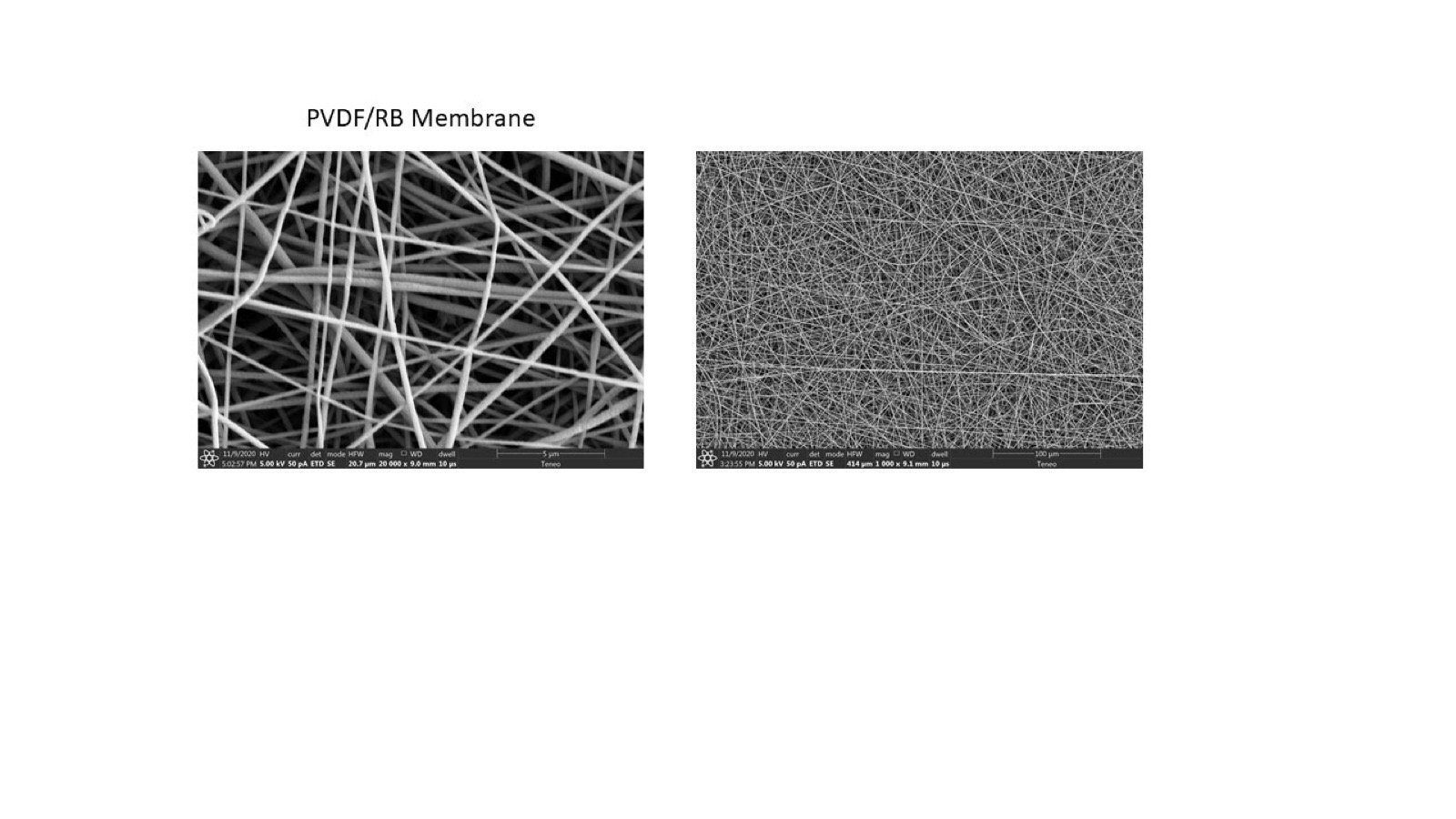
Scanning electron micrograph of electrospun nanofiber membrane with embedded photoreactive dye
Fig. 1. PVDF nanofiber membrane with embedded Rose Bengal photoreactive dye. Scanning electron micrograph.
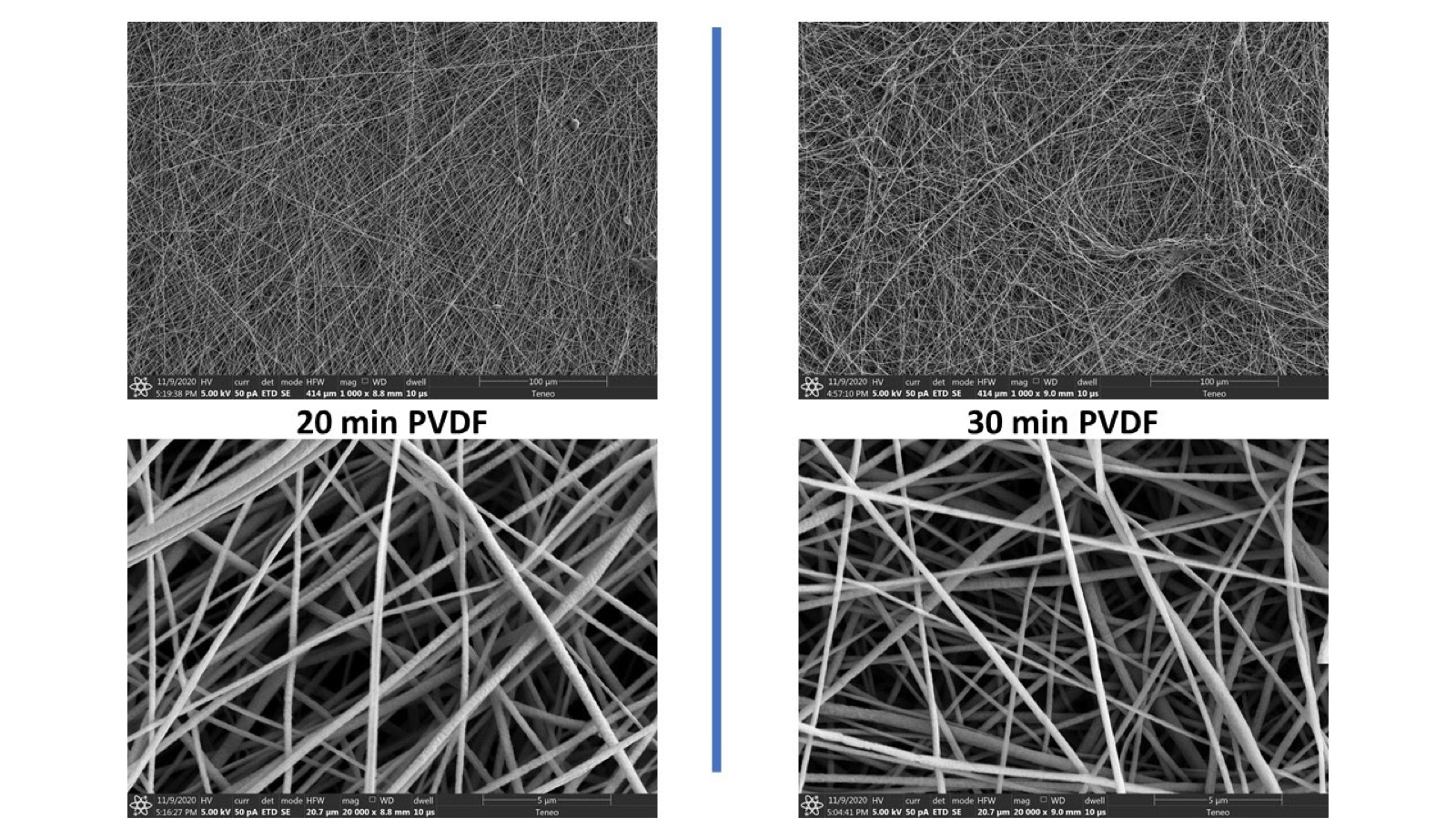
Scanning electron micrograph of plain PVDF nanofiber membrane for comparison
Fig. 2. Plain PVDF nanofiber membrane, shown for comparison. Scanning electron micrograph.

Measured characteristics

Physical performance, as produced.

These are measured properties of production material from the 2022 industrial manufacturing run, not laboratory prototypes.

Particulate filtration
94–95% measured on production rolled goods (2022 run, Valencia, Spain)
Pressure drop
0.065" water column, low breathing resistance for a filtration media of this class
Fiber architecture
Sub-micron electrospun fibers; dense, tortuous pore structure (Figs. 1–2)
Active chemistry
Rose Bengal photoreactive dye, embedded in the fiber during spinning; visible-light activated
Form factor
Rolled goods, convertible by standard mask, respirator, and filtration lamination processes
Polymer system
PVDF (polyvinylidene fluoride)

Pressure drop. Filtration and breathability normally trade off. This media holds 0.065" of water column, which is why a material that filters at 94–95% can still be worn.

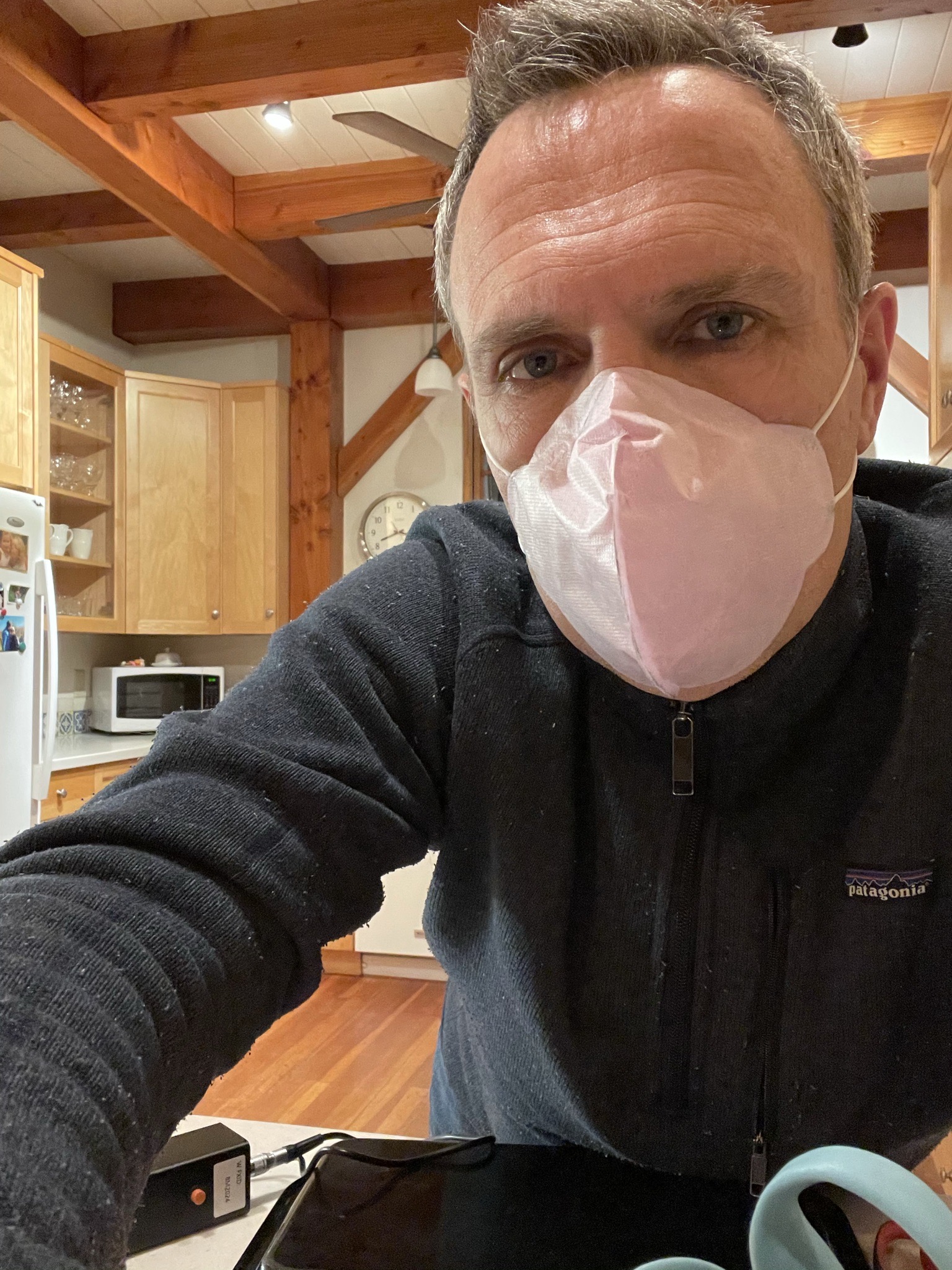
Aclara finished mask, constructed from Aclara nanofiber media
Fig. 3. Finished mask constructed from Aclara nanofiber media. Prototype photography.

Applications

Where the media goes.

Respiratory protection

Masks & respirators

Supplied as rolled goods for conversion into surgical masks, respirators, and other respiratory-protection products. This is the form factor already produced and sold at scale.

Adjacent filtration

New form factors

The nanofiber-plus-photoreactive architecture is form-factor agnostic. HVAC media, room-air purification, and other layered filtration applications are natural extensions of the same materials system.

Platform extension

New chemistries

The embedding process is not limited to one dye. Aclara's spinning process can carry other functional chemistries into the fiber.

The published record

The science is public.

The performance of this material against airborne viruses has been studied at university laboratories and published in a peer-reviewed journal. We link the published record rather than restating findings here; for the citation, the science team, and the institutions behind it, see Research.